Iceland: Strong earthquake swarm on Reykjanes

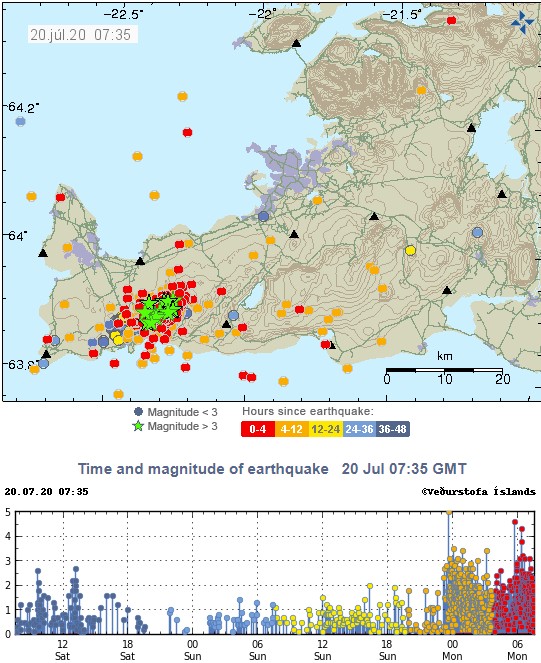
The Icelandic peninsula of Reykjanes is again hit by a strong Earthquake swarm. The strongest single quake had a magnitude of 5.0 and manifested itself 1.6 km northwest of Fagradalsfjall, with a hypocentre at 10 km depth. Fagradalsfjall is the highest elevation on Reykjanes with a height of 385 m and lies east of Grindavik. In the end, the epicentre of seismic activity shifted a little to the east, starting from the quake spot north of Grindavik where most of the previous earthquakes occurred.

IMO recorded a total of 936 earth tremors in the Reykjanes area in the last 48 hours. 16 quakes had magnitudes greater than 3, some of them even stronger than M 4.0. I assume that the quakes are related to further magma intrusion. However, an IMO report on this is still pending. However, the Icelandic Meteorological Authority reports that the stronger earth quakes were felt in the southwest of Iceland.
Stromboli: Another strong explosion

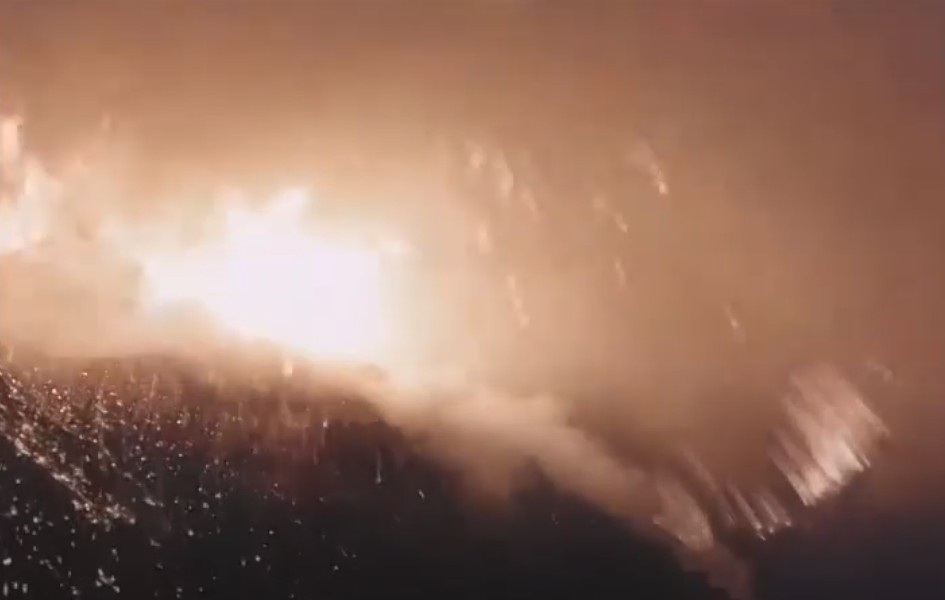
The Italian volcano Stromboli once again proved its unpredictability tonight and erupted a large amount of tephra at 3 o’clock, which covered the entire summit area with glowing bombs. On the video embedded below you can see that it was a short eruption phase with 4 explosions. At least 2 winding vents were involved in the explosions. Such unusually strong eruptions occurred in the past and cost the lives of several volcano observers. This time, however, no people should have been in the summit area, because the ascent was still blocked. Local residents report that they were woken up by a loud bang. However, no material fell in the lower part of the volcano. The eruption was weaker than on 3 July last year.

Unlike last year’s two eruptions, there was no longer period of increased activity before. On the contrary, the eruptions of the past days were comparatively weak. Only a few hours before, the strombolian eruptions increased significantly. Images of these were shared in our FB group “volcanoes and volcanism“. The only indicator for magma rise was an increased carbon dioxide emission: in the last two days the daily production increased from less than 200 tons to almost 1000 tons. Already at the end of June there were 2 measurements of more than 1000 tons per day.

Iceland: New earthquake M 4.1

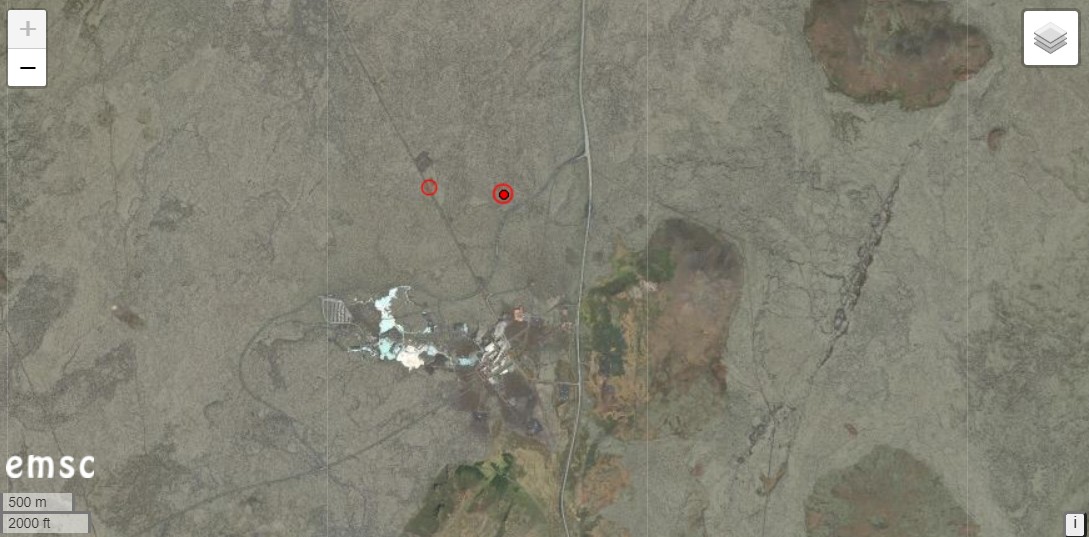
There was another strong earthquake in Iceland this morning. It had a magnitude of 4.1 and manifested itself on the Reykjanes Peninsula. The epicentre was located 4.1 km north of Grindavik and only about 1 km from the Blue Lagoon and Thorbjörn Volcano. The depth of the hypocentre is estimated to be only 2.5 km. This makes it the closest surface earthquake of this magnitude since the swarm earthquakes started on the peninsula. The local residents should have been well shaken. It remains exciting to wait and see whether reports of crevice openings will come in. Just 2 minutes earlier, there was a quake of magnitude 3.2 at a depth of 2.3 km. Further weaker earthquakes followed. In total IMO registered 40 tremors on Reykjanes in the last 48 hours.

Raung: Eruption started

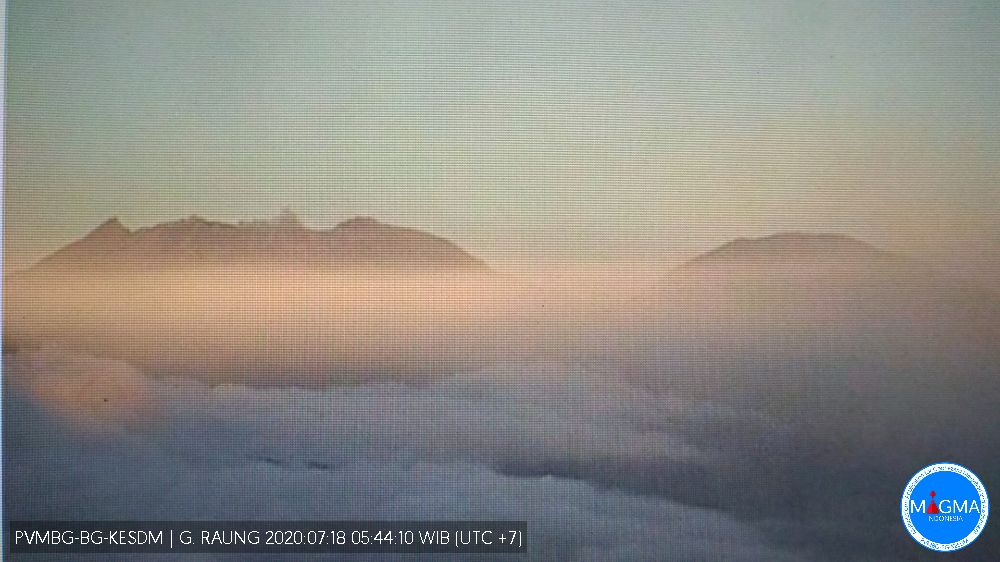
On the Indonesian island of Java, the volcano Raung has started an eruption. The eruption was preceded by a seismic crisis. It started on July 13th. The first small ash cloud was detected 2 days ago. A VONA warning was issued and air traffic on the neighbouring island of Bali was suspended. However, due to the corona lockdown, only very few flights may have been affected. In the meantime a stable eruption on a low level has occurred. During the first 6 hours of the day, volcanologists from VSI recorded 28 seismic eruption signals. They had amplitudes between 4 and 14 mm and lasted up to 150 seconds. MIROVA recorded a moderate thermal anomaly with peak values of 15 MW. One can assume strombolian activity, where glowing tephra accumulates in the crater. The alert status has been raised to “yellow.”

The last eruptions of the Raung occurred in 2015, when the eruptions started like now and increased within a few weeks to a very interesting eruption, where not only strombolian eruptions were generated, but also lava flows that filled part of the crater.

Andaman: Earthquake M 6.1

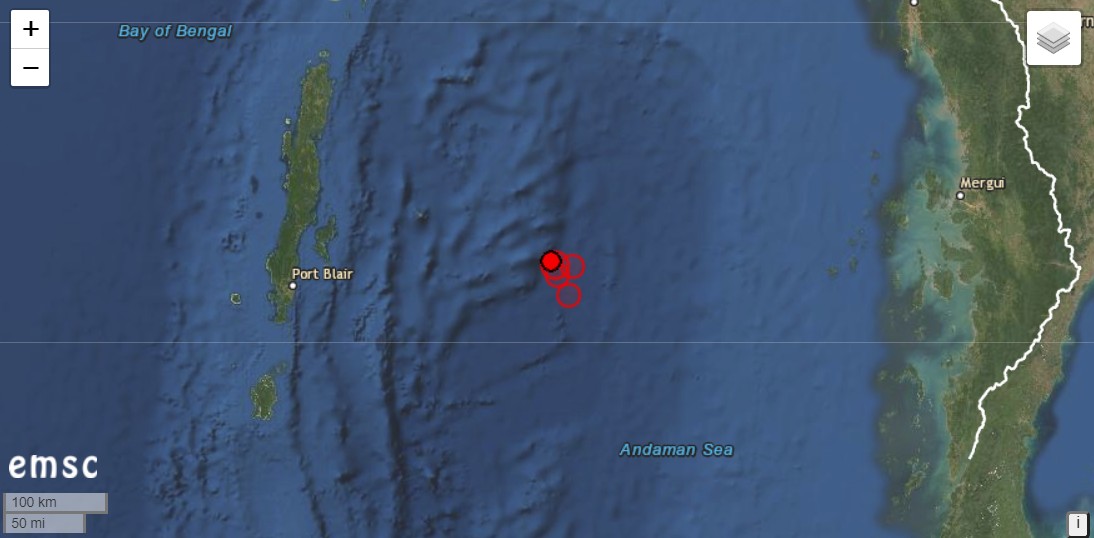
The Andaman and Nicobar Islands were shaken by an earthquake with a magnitude of 6.1. The hypocentre was 10 km deep. The epicentre manifested 236km east of Port Blair. The Indian Ocean archipelago belongs to India, but geographically it is closer to Myanmar. An aftershock of magnitude 5.6 followed at a depth of only 2 km. There had also been several aftershocks in the 4-magnitude range. Seismologists have been expecting a strong quake in the region (Andaman Sea) for some time, which could trigger a tsunami.

The quake was automatically detected.

Nishinoshima grows

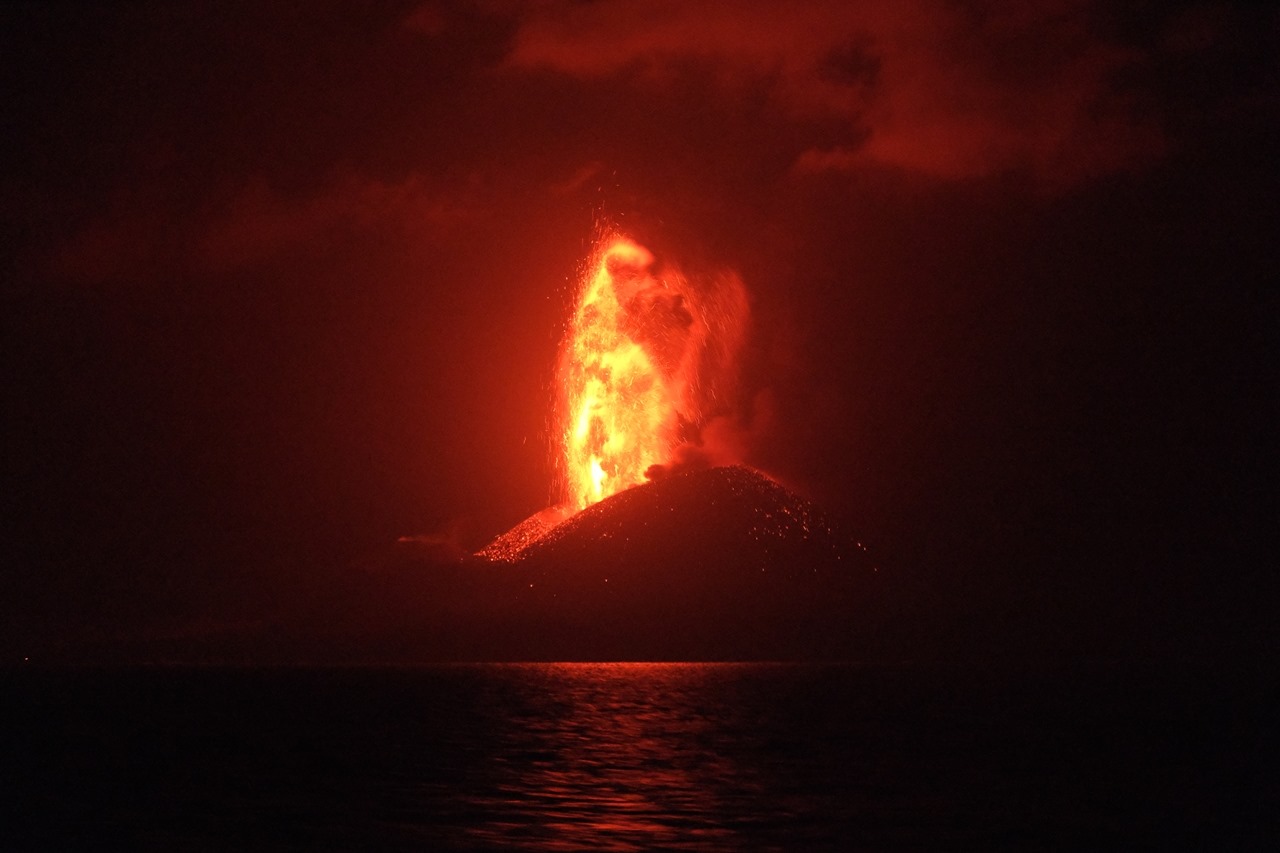
The Japanese volcanic island of Nishinoshima is growing and growing and is not only producing lava flows but also ash clouds. On 13. July these reached an altitude of 6100 m, with a cone height of 200 m.The Japanese coast guard photographed lava fountains that were as high as the cinder cone. Today the activity seems to be decreasing. The VAAC recorded volcanic ash at an altitude of 3700 m.

New observations will be made on July 20 by the meteorological observation ship “Keifu”.

Sangay: Thermal anomalies detected

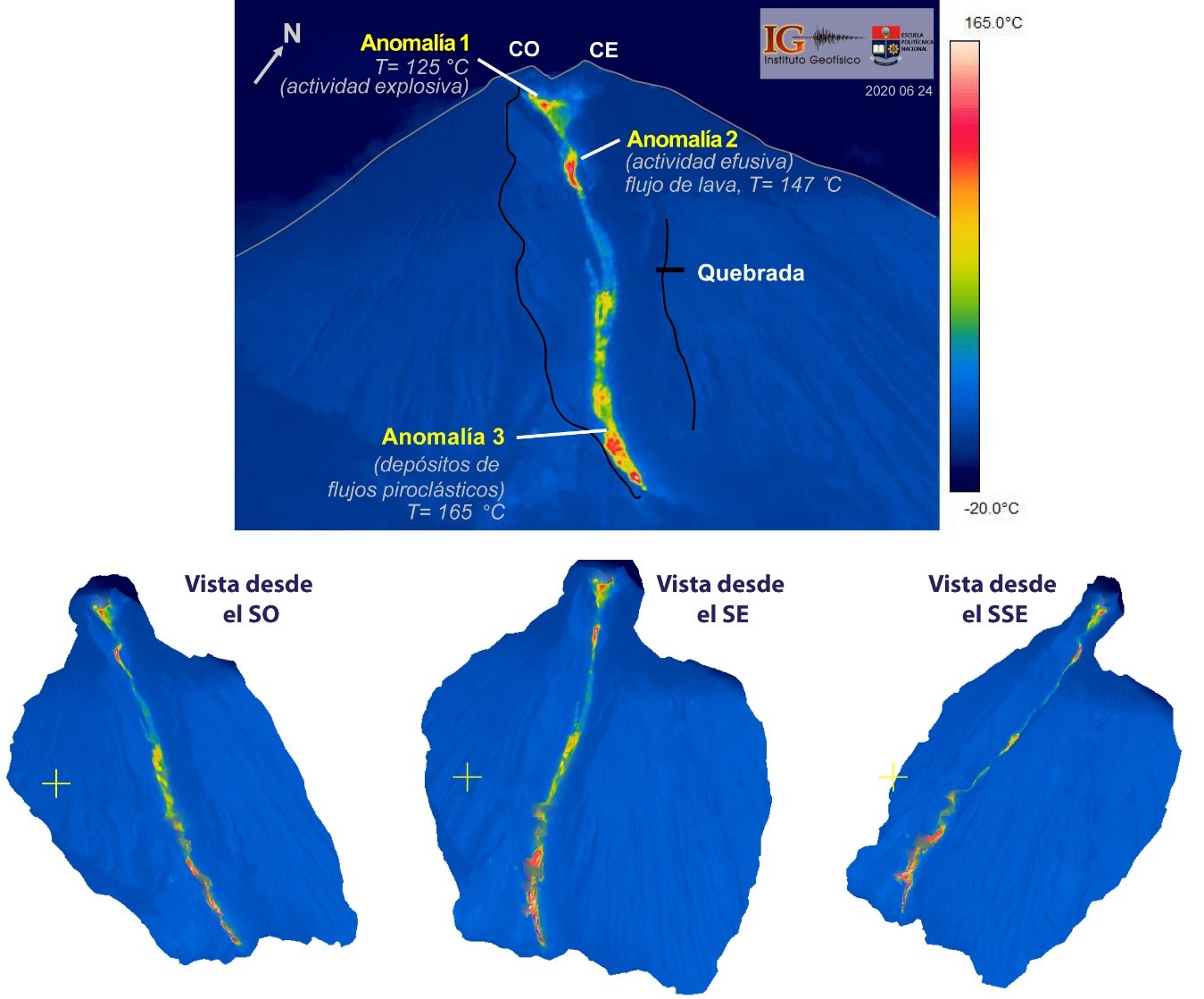
The Ecuadorian volcano Sangay is still active. Today, explosive eruptions were detected, which caused volcanic ash to rise to an altitude of 6400 m. The ash was drifted westward. In a special report of the IGEPN the morphological changes of the volcano caused by the eruptions were investigated. Most striking is a depression on the southeast flank. It was carved into the flank by lava flows, debris avalanches and pyroclastic flows. The gorge is almost 400 m wide, 4 km long and starts from the crater. Three thermal anomalies have been detected in it. 2 of the anomalies are located in the upper part of the canyon. The top anomaly is in the crater area and marks an explosive vent. The 2nd anomaly is below the base of the crater and represents the source of the lava flows. The 3rd heat source is located in the lower part of the gorge and is probably generated by an accumulation of hot deposits of pyroclastic flows.

Piton de la Fournaise: No eruption upcoming

The seismic crisis started on July 3, 2020 at 07:20 local time and ended around 08:00 local time. This episode was accompanied by surface deformations which remained extremely weak and localized at the top of the Piton de la Fournaise. Since then, no resumption of seismic activity or deformation has been observed.
Several hours without any activity being observed are evidence of the deep stop of magma in the building.
Nevertheless, given the resumption of inflation observed since June 16, a medium-term eruption cannot be ruled out.

Popocatepetl: Volcano with spirit

Close to the Mexican capital the Popocatepetl is still active. Yesterday the CENAPRED Institute published a very atmospheric photo of a sunset eruption. Besides the explosion, 169 ash-steam exhalations and 32 minutes of tremors were recorded. Today, explosive volcanic eruptions were also recorded: the VAAC issued 2 VONA messages according to which volcanic ash had risen to an altitude of 5800 m.

Popocatepetl has become a permanently active volcano in recent years. Only seldom there are longer pauses in eruption. In addition a lava dome grows sporadically in the crater. The ascent is prohibited.

Merapi: new dome growth

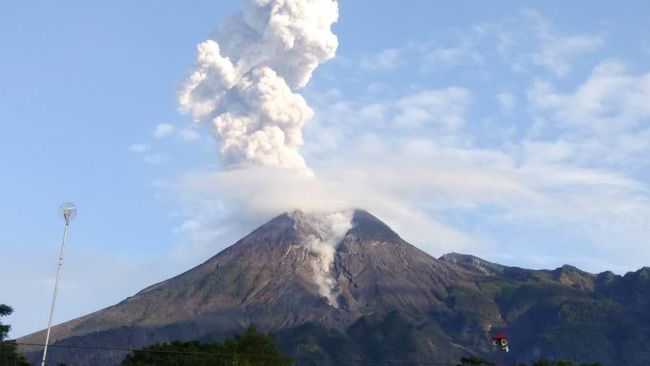
On the Indonesian website krjogja.com it is reported that the Merapi has entered a new phase with dome growth. This information comes from Agus Budi Santoso, the head of the Merapi Volcano section at the BPPTKG. The new intrusion is the 7th phase since the beginning of the eruption and is accompanied by explosive activity and deep seismic. The larger eruptions in the first half of the year would have more than halved the volume of the lava dome to 200,000 cubic metres. Now it looks as if the dome is getting bigger again, increasing the potential danger.