Disastrous Eruption at Mount Dukono Claims 3 Lives and Injures 5
On 8 May 2026 at approximately 07:41 local time, a major explosive eruption occurred at the volcano Dukono on Halmahera, Indonesia, leading to a fatal incident involving multiple hiking groups in a restricted summit area.
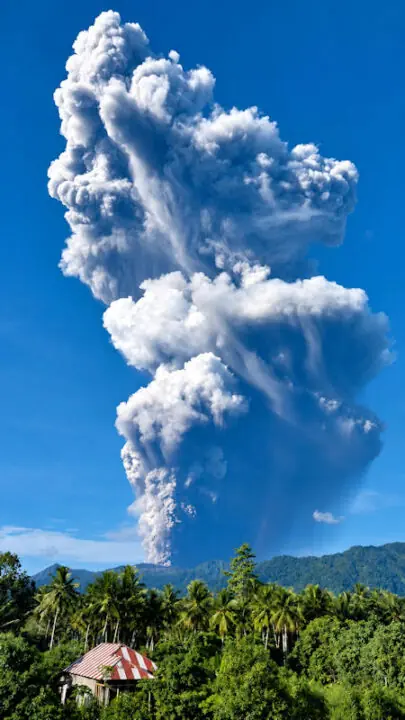 Three people have been confirmed dead and five others injured. All victims have since been recovered and formally identified by the authorities. Officials state that the fatalities were most likely caused by a pyroclastic flow that rapidly descended the upper slopes during the eruption, offering virtually no chance of escape.
Monitoring data indicates that the eruption column reached heights of up to approximately 10 kilometers into the atmosphere. The explosive phase lasted around 15 to 20 minutes, but escalated extremely quickly, leaving those in the vicinity of the crater with little to no effective warning. A broad ash plume spread across the surrounding region, temporarily reducing visibility and affecting air quality.
Investigations show that several guided trekking groups were present near the crater rim despite an official closure of the area. In total, around 20 people were initially reported missing in the immediate aftermath of the eruption. Following intensive search and rescue operations, 17 individuals were either rescued or managed to evacuate on their own. Three people did not survive the event, while five injured survivors were transported to nearby medical facilities, suffering from a combination of burn injuries, trauma from falling debris, and exposure to toxic volcanic gases.
Authorities emphasized that access to the crater zone had already been formally prohibited prior to the incident due to Dukono’s persistent and highly unpredictable activity. In response to the tragedy, officials announced stricter enforcement measures, including penalties for entering restricted zones. For the first time, these regulations are expected to include criminal sanctions aimed at preventing unauthorized access to high-risk volcanic areas.
Rescue operations were conducted under extremely hazardous conditions, with unstable terrain, continuing gas emissions, and the possibility of secondary eruptive activity forcing repeated pauses in recovery efforts. Volcanologists continue to closely monitor the situation, noting that the volcanic system remains under significant internal pressure.
Seismic readings suggest ongoing unrest beneath the volcano, and further explosive activity cannot be ruled out. The region remains on high alert, and authorities continue to urge strict compliance with all safety warnings and exclusion zones around the volcano.