Pyroclastic flow reached up a distance of 2 kilometres on Mayon
On May 2, the Philippine volcano Mayon showed a clear intensification of its activity. In the late afternoon, two significant pyroclastic flows descended the southwest flank within minutes of each other. The events occurred at 5:38 p.m. and 5:41 p.m. local time and were documented by the Philippine Institute of Volcanology and Seismology (PHIVOLCS). The flows were generated by the collapse of an active lava flow in the Mi-isi channel and moved downslope as extremely hot mixtures of gas, ash, and rock, traveling distances of up to four kilometers.
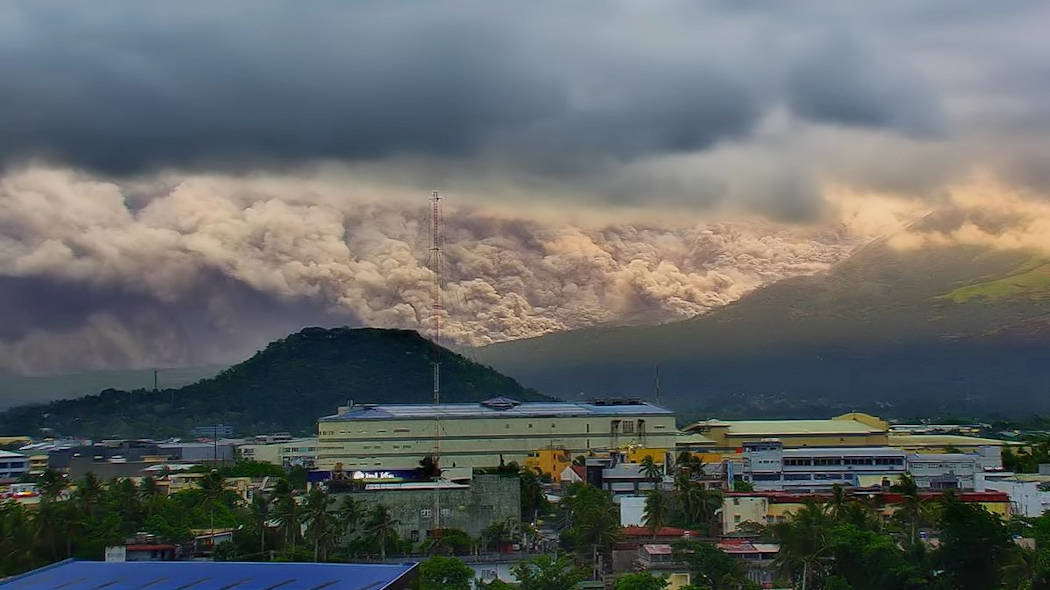 The resulting ash clouds drifted west-southwest and reached altitudes of about 3,000 meters. They were also detected by the Tokyo VAAC, which issued corresponding advisories. Heavy ashfall affected several communities, particularly Ligao City, Guinobatan, and Legazpi. Buildings, roads, and vehicles were blanketed in ash, while residents attempted to protect themselves with face masks.
Pyroclastic flows are among the most dangerous volcanic phenomena, as they move rapidly, almost silently, and at extreme temperatures, making escape nearly impossible. The events were not entirely unexpected: prior to the flows, a noticeable increase in rockfall activity and seismic unrest had been recorded. Within 24 hours, 376 rockfall events and 39 volcanic earthquakes were registered.
Mayon remains at Alert Level 3. Authorities continue to warn of ongoing hazards and strongly advise against entering the six-kilometer danger zone around the crater.